
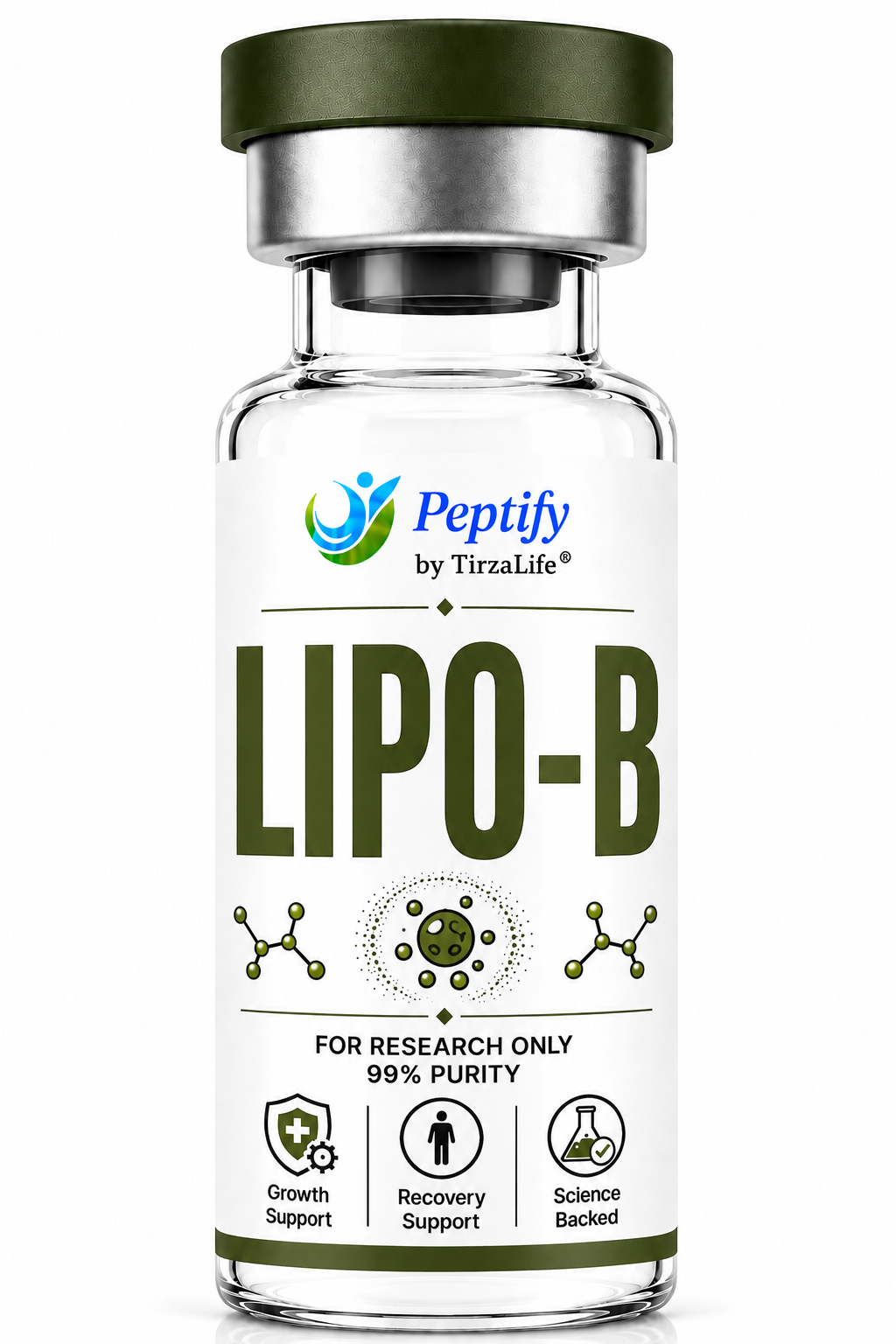
Lipo-B (LC120)
A lipotropic wellness formulation entry for ingredient verification and clinician-guided review.
Contents
Use this guide as a structured review page. The same headings appear for every protocol so clients and the care team can scan the page consistently.
Protocol Overview
Lipo-B formulations commonly refer to compounded lipotropic blends, but exact ingredients can vary by supplier and lot. This LC120 entry should be reviewed by certificate of analysis and label, with attention to B-vitamin exposure, choline or inositol content, allergy history, liver or kidney status, medications, and the absence of FDA-approved weight-loss claims.
- Lipotropic ingredient verification
- B-vitamin exposure review
- Allergy and medication screening
- Clinician-guided safety discussion
Recommended Source
This protocol is linked to the workbook reference source below.
- LIPO-C Dosage Protocol Guide — Research Standards Open source
Important Note
This page is informational and does not authorize use. Peptify clients should complete assessment, disclose medications and health history, and follow the clinician-approved plan only.
- Do not start, stop, combine, or change a protocol based only on website content.
- Emergency symptoms require urgent medical care, not a website or routine follow-up message.
Quickstart Highlights
Discard it immediately. Do not inject. Cloudiness indicates bacterial contamination or particulate matter from improper reconstitution. Discolouration (yellow, brown, or pink tint) suggests methionine oxidation or choline degradation. Neither is salvageable. Cloudiness can result from injecting water too forcefully during reconstitution, causing protein denaturation, or from introducing contaminants during vial access. Always use a fresh alcohol swab before every needle entry and never reuse needles between draws.
- LIPO-C formulations contain methionine, inositol, and choline. Compounds that facilitate hepatic lipid export and prevent fatty liver accumulation in metabolic research models.
- Methionine oxidises rapidly at room temperature; storing reconstituted LIPO-C above 8°C for more than 2 hours causes 30–40% potency loss within 48 hours.
- Standard dosing protocol is 0.5–1.0mL subcutaneously 2–3 times weekly, administered in a fasted state to align with hepatic lipid mobilisation cycles.
- Reconstitute with bacteriostatic water at 1:1 or 2:1 ratio depending on injection volume preference; use within 28 days of reconstitution.
- Rotate injection sites between abdomen, thigh, and upper arm to prevent lipohypertrophy and maintain consistent absorption kinetics.
- Resume the protocol at the next scheduled injection. Do not double-dose to 'catch up'. Lipotropic compounds do not have a cumulative dose-response relationship; administering 2.0mL in a single injection does not produce twice the effect of 1.0mL. Missing a dose interrupts the steady-state plasma concentration but does not negate prior administrations. The most common mistake is attempting to compensate with back-to-back injections, which increases injection-site reactions without improving outcomes.
- If the vial was at room temperature (20–25°C) for 8–12 hours, methionine oxidation likely reached 10–15%. The solution may still appear clear and normal, but bioactivity is compromised. For research applications requiring precise dosing, discard the vial and reconstitute a fresh one. For less stringent applications, the vial can still be used but with the understanding that potency is reduced. Temperature-excursion damage is not visually detectable. Methionine sulfoxide is colourless and remains in solution.
- Mild discomfort lasting 10–15 minutes post-injection is normal and results from subcutaneous tissue expansion and pH differential (bacteriostatic water has a pH of 5.0–7.0; subcutaneous interstitial fluid is pH 7.4). Persistent pain beyond 30 minutes, or swelling that increases over 2–4 hours, suggests either incorrect injection depth (intramuscular instead of subcutaneous) or a hypersensitivity reaction to benzyl alcohol preservative. Rotate sites more frequently and reduce injection volume per site. If symptoms persist across multiple sites, consider switching to preservative-free sterile water for reconstitution.
- Here's the honest answer: LIPO-C is not a fat-burning compound. It does not increase metabolic rate, suppress appetite, or directly oxidise stored triglycerides. What it does. When dosed correctly and stored properly. Is facilitate the export of hepatic triglycerides via VLDL assembly. That distinction matters because it sets realistic expectations. If hepatic fat accumulation is not the limiting factor in a given metabolic context, adding lipotropic compounds produces no measurable benefit.
- The evidence base for LIPO-C efficacy is observational, not placebo-controlled. Most studies showing benefit come from veterinary research on fatty liver disease in livestock, where methionine and choline supplementation demonstrably reduces hepatic triglyceride content. Human data is limited to case reports and uncontrolled trials in the aesthetic medicine space. This does not mean LIPO-C is ineffective. It means the mechanism is well-understood but the clinical magnitude of effect in healthy humans remains uncertain.
- The variable that determines whether a LIPO-C dosage protocol 'works' is whether the subject has a genuine methyl donor deficiency or impaired phospholipid synthesis. Methionine is an essential amino acid. Dietary intake of 1.5–2.0 grams per day is sufficient for most individuals. Adding exogenous methionine via injection only produces additive benefit if baseline intake is inadequate or if hepatic demand exceeds supply (as occurs in rapid fat mobilisation or during caloric restriction). For subjects consuming adequate protein, the limiting factor is not methionine availability. It is the rate of VLDL assembly and secretion, which is hormonally regulated and not directly dose-responsive to lipotropic supplementation.
- Standard LIPO-C dosage protocols assume a 70kg subject with normal hepatic function and no pre-existing methyl donor deficiency. Adjustments may be warranted in research contexts involving caloric restriction, high-intensity training, or metabolic stress states where hepatic lipid turnover is elevated.
- Dose escalation: some research protocols use a titration schedule starting at 0.5mL twice weekly for the first two weeks, then increasing to 1.0mL twice weekly if no adverse reactions occur. The rationale is that subjects with baseline methionine deficiency may experience transient gastrointestinal symptoms (nausea, mild diarrhoea) when methyl donor availability suddenly increases. Titrating allows metabolic adaptation. However, this is more common with oral methionine supplementation than with subcutaneous lipotropic injections, where first-pass hepatic metabolism is bypassed.
- Combination protocols: LIPO-C is often administered alongside other metabolic research compounds. When combined with B-complex vitamins (especially B12 and folate), lipotropic activity increases because these vitamins serve as cofactors in the methionine cycle and homocysteine remethylation. When combined with L-carnitine, the focus shifts from hepatic lipid export to mitochondrial fatty acid oxidation. The two mechanisms are complementary but operate at different metabolic branch points.
- Cycling vs continuous administration: some research designs use 8–12 week administration cycles followed by 4-week washout periods. The logic is that continuous methionine supplementation may downregulate endogenous methionine synthase activity via feedback inhibition. However, clinical evidence for this effect is weak. Most long-term lipotropic studies show stable plasma methionine levels without signs of metabolic adaptation. For research applications lasting beyond 12 weeks, periodic assessment of plasma homocysteine levels can confirm that the methionine remethylation pathway remains functional.
- Real Peptides' research-grade peptide catalogue includes lipotropic formulations alongside other metabolic research tools, each synthesised with exact amino-acid sequencing and verified purity. When protocol precision matters, compound quality is the foundation everything else depends on.
- LIPO-C dosage protocols succeed when researchers treat reconstitution and storage as critical variables. Not afterthoughts. A perfectly dosed injection of degraded compound produces no effect. The discipline required to maintain 2–8°C storage, rotate injection sites, and administer in a fasted state separates protocols that generate reproducible data from those that produce noise. If the application requires measurable outcomes, every step from vial opening to injection timing must be standardised and documented. Precision compounds demand precision handling.
- Add bacteriostatic water slowly down the side of the vial to minimise foaming, swirl gently for 30–60 seconds until powder fully dissolves, and refrigerate immediately. Do not shake vigorously — this introduces microbubbles that accelerate methionine oxidation. Use a 1:1 ratio (equal volume of water to vial size) for standard concentration or 2:1 for a more dilute solution that allows smaller injection volumes.
- The standard protocol is 2–3 times weekly (e.g., Monday/Thursday or Monday/Wednesday/Friday), with each injection spaced at least 48 hours apart. This frequency aligns with hepatic lipid export cycles and methionine’s downstream effects on phospholipid synthesis, which persist 48–72 hours post-injection. Daily administration does not meaningfully increase lipotropic activity.
- No — reconstituted LIPO-C must be refrigerated at 2–8°C at all times except during the 10–15 minutes immediately before injection. Room-temperature exposure beyond 2 hours causes methionine to oxidise into methionine sulfoxide, which has no lipotropic activity. A vial left at 20–25°C for 48 hours loses 30–40% of its methionine content even if it still appears clear.
- Rotate between the abdomen (2 inches from the navel), anterior thigh, and upper arm. Abdominal subcutaneous tissue shows the most consistent absorption kinetics. Use at least 4–6 different sites across a weekly protocol to prevent lipohypertrophy (localised fat accumulation from repeated injections in the same spot).
- Use within 28 days of reconstitution when stored at 2–8°C. Bacteriostatic water contains 0.9% benzyl alcohol, which maintains sterility for approximately 4 weeks, but methionine and choline stability begins declining after 21 days. Vials older than 28 days should be discarded regardless of appearance.
- Fasted state administration (4+ hours post-meal or before sleep) produces stronger lipotropic effects because hepatic lipid mobilisation is highest during fasting and overnight. Injecting after a high-carbohydrate meal blunts the response — insulin signalling favours lipogenesis over lipolysis, which opposes the intended lipotropic mechanism.
- Discard immediately — cloudiness indicates bacterial contamination or particulate matter from improper mixing, while yellow, brown, or pink discolouration suggests methionine oxidation or choline degradation. Neither condition is reversible, and injection carries risk of infection or injection-site reaction. Always use fresh alcohol swabs before accessing the vial.
- A 1:1 ratio produces standard concentration (25mg methionine, 50mg inositol, 50mg choline per mL), while a 2:1 ratio doubles the total volume and halves the concentration. The 2:1 dilution allows smaller injection volumes per dose, which reduces injection-site discomfort for subjects sensitive to larger subcutaneous boluses. Total compound dose remains the same — only volume changes.
- Subcutaneous LIPO-C bypasses first-pass hepatic metabolism, delivering methionine, inositol, and choline directly into systemic circulation. Oral supplements undergo significant hepatic extraction before reaching peripheral tissues — bioavailability of oral methionine is approximately 60–70% vs near 100% for subcutaneous administration. This makes injection protocols more predictable for research applications requiring precise dosing.
- No — lipotropic compounds do not have a linear dose-response curve. Increasing from 1.0mL to 2.0mL per injection does not double the effect. The limiting factor is hepatic VLDL assembly capacity, which is hormonally regulated and not directly responsive to methionine saturation. If no effect is observed at standard dosing, the issue is likely baseline methyl donor sufficiency or inadequate metabolic stress (caloric deficit, training stimulus) to drive hepatic lipid export.
- Methionine provides methyl groups for phospholipid synthesis, choline incorporates directly into VLDL particles, and inositol facilitates lipoprotein assembly. Together, they enable hepatocytes to package and export triglycerides as VLDL rather than accumulating them as hepatic steatosis. LIPO-C does not increase lipolysis or thermogenesis — it addresses the export bottleneck that occurs when hepatic lipid mobilisation exceeds phospholipid synthesis capacity.
- Yes — bacteriostatic water contains 0.9% benzyl alcohol as a preservative, which is well-tolerated in subcutaneous injections at the volumes used in LIPO-C protocols (0.5–1.0mL per dose). Hypersensitivity reactions are rare but possible; symptoms include persistent injection-site pain beyond 30 minutes or increasing swelling over 2–4 hours. If this occurs, switch to preservative-free sterile water for reconstitution.
- Research Blogs Open source
- Popular Peptides Open source
- Get Free Guide Open source
- Our Ambassadors Open source
- Become an Affiliate Open source
- Affiliate Login Open source
- Affiliate Portal Open source
- support@realpeptides.co
- +1 813-330-0290
- All products on this site are for research and development use only. Products are not for human consumption of any kind. The statements made on this website have not been evaluated by the US Food and Drug Administration. The statements and the products of this company are not intended to diagnose, treat, cure, or prevent any disease.
- Real Peptides is a chemical supplier. Real Peptides is not a compounding pharmacy or chemical compounding facility as defined under 503A of the Federal Food, Drug, and Cosmetic Act. Real Peptides is not an outsourcing facility as defined under 503B of the Federal Food, Drug, and Cosmetic Act.
- All products are sold for research, laboratory, or analytical purposes only, and are not for human consumption.
- © 2025 Real Peptides.
- Privacy policy Open source
- Refund policy Open source
- Shiping policy Open source
- Contact information Open source
- Login
- Register
- End of Content.
References
Reference source used for this protocol page.
- LIPO-C Dosage Protocol Guide — Research Standards Open source
- Peptify Reconstitution Guide