
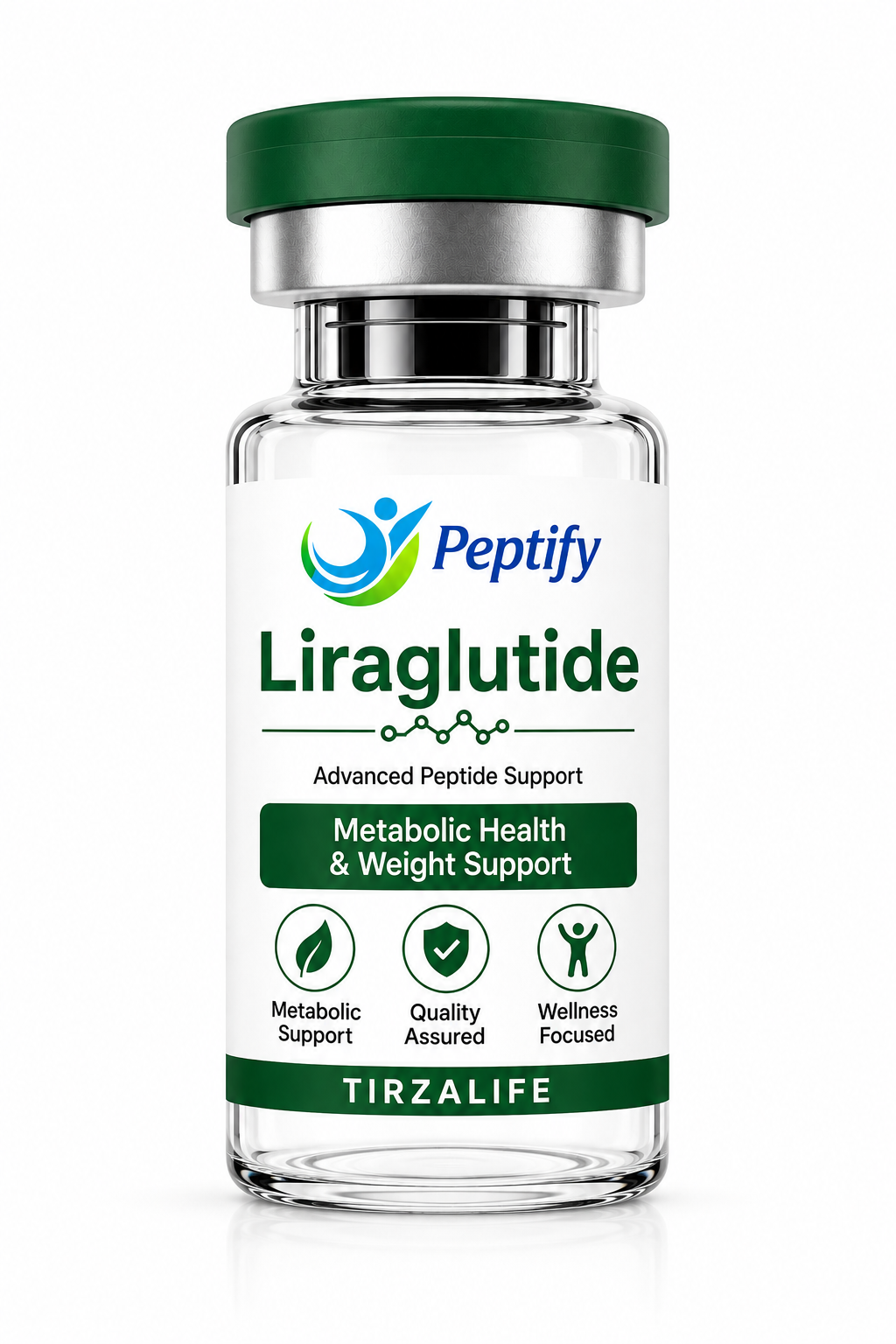
Liraglutide 10mg
A prescription GLP-1 receptor agonist entry for metabolic eligibility and safety review.
Contents
Use this guide as a structured review page. The same headings appear for every protocol so clients and the care team can scan the page consistently.
Quickstart Highlights
Reference-linked protocol details for Liraglutide 10mg.
- Reference title: Liraglutide Protocol: Dosing & Titration Guide
- Product: Liraglutide 10mg vial
- A prescription GLP-1 receptor agonist entry for metabolic eligibility and safety review.
- Source page: Open source
Protocol Overview
Liraglutide is a GLP-1 receptor agonist used in prescription metabolic care, with safety review centered on glucose-lowering therapy, gastrointestinal tolerability, pancreatitis or gallbladder history, thyroid C-cell tumor/MEN2 contraindication screening, pregnancy status, and clinician monitoring.
- GLP-1 receptor agonist context
- Metabolic eligibility review
- GI and glucose-medication screening
- Clinician-guided monitoring discussion
Recommended Source
This protocol is linked to the workbook reference source below.
- Liraglutide Protocol: Dosing & Titration Guide Open source
Important Note
This page is informational and does not authorize use. Peptify clients should complete assessment, disclose medications and health history, and follow the clinician-approved plan only.
- Do not start, stop, combine, or change a protocol based only on website content.
- Emergency symptoms require urgent medical care, not a website or routine follow-up message.
Dosing Protocol
Slow titration is essential. The GI tract adapts to GLP-1 activation over weeks — rushing the titration causes severe nausea, vomiting, and diarrhea that frequently leads to discontinuation.
| Research Dose | 0.6–3.0 mg/day |
|---|---|
| Frequency | Once daily |
| Duration | Ongoing (chronic therapy) |
| Administration | Subcutaneous injection |
- Total titration time: 5 weeks. This is faster than semaglutide (16 weeks) because liraglutide’s lower weight loss efficacy requires less aggressive GI adaptation.
- Finding your dose: Not everyone needs 3.0 mg. If 1.8 mg produces meaningful appetite reduction with tolerable side effects, staying there is reasonable — particularly if the primary goal is metabolic health rather than maximum weight loss. The marginal benefit of each 0.6 mg increment decreases while side effects increase.
- Same time each day — liraglutide’s 13-hour half-life means consistent daily dosing is important for stable blood levels. Pick a time and stick with it.
- Morning or evening — both are effective. Some users prefer morning (aligns appetite suppression with daytime eating). Others prefer evening (sleep through the initial nausea period).
- If you miss a dose: If less than 12 hours late, take it. If more than 12 hours late, skip and take the next dose at the usual time. Do not double up.
- No fasting required — inject with or without food.
- Brand-name Victoza/Saxenda comes in pre-filled multi-dose pens that do not require reconstitution. Compounded liraglutide may come as lyophilized powder requiring reconstitution.
- For a 18 mg vial — add 3 mL bacteriostatic water:
- Concentration: 6 mg/mL. An 18 mg vial lasts 6-30 days depending on dose.
- Storage: Refrigerate at 2-8°C. In-use Saxenda pens can be stored at room temperature (up to 30°C) for up to 30 days. Reconstituted compounded vials should remain refrigerated and be used within 28 days.
- Liraglutide is not cycled. It is FDA-approved for chronic, indefinite use. Discontinuation leads to weight regain in most patients — the SCALE Maintenance trial demonstrated this clearly. The biological drivers of obesity (appetite dysregulation, metabolic set point defense) reassert themselves when GLP-1 stimulation is removed.
- Some practitioners use liraglutide as a bridge: patients start on liraglutide for initial weight loss, then transition to semaglutide for maintenance (leveraging the convenience of weekly dosing). Others do the reverse — patients intolerant of semaglutide switch to liraglutide for ongoing management.
- Minimal appetite change — this is a sub-therapeutic initiation dose
- Mild nausea possible, usually manageable
- No meaningful weight change
- Learning the injection routine
- Appetite suppression becomes noticeable — portions naturally decrease
- Nausea may increase with each dose escalation, then settles within 3-5 days
- Food preferences begin shifting — high-fat and high-sugar foods become less appealing
- Weight loss begins: 1-2 lbs per week typical
- Some users notice reduced alcohol desire
- Full appetite suppression — “food noise” is significantly quieter
- Meal sizes are naturally smaller; snacking decreases substantially
- Steady weight loss: 1-2 lbs per week
- GI side effects typically stabilize by week 6-8
- Energy levels may improve as metabolic markers normalize
- Weight loss continues at a gradually slowing pace
- Most users lose 5-8% of body weight by month 6 (at 3.0 mg)
- Body composition improvements become visible
- Metabolic markers improve: fasting glucose, HbA1c, triglycerides, blood pressure
- The rate of loss slows as the body approaches a new set point
- Weight loss plateaus for most users by 9-12 months
- Liraglutide shifts from active weight loss to weight maintenance
- Appetite suppression persists as long as the medication is continued
- Discontinuation typically leads to gradual weight regain over 12 months
- The SCALE extension data showed that patients who maintained liraglutide therapy preserved their weight loss; those who discontinued regained approximately two-thirds within 12 months — the same pattern observed with semaglutide
- Liraglutide has one of the most extensive clinical evidence bases of any metabolic drug, with over a decade of randomized controlled trials and real-world data.
- SCALE Obesity and Prediabetes (Phase 3, 56 weeks): Liraglutide 3.0 mg/day produced 8.0% mean body weight loss vs 2.6% placebo in overweight/obese adults. 63.2% of liraglutide-treated patients lost at least 5% body weight (vs 27.1% placebo). Additionally, 69% fewer liraglutide-treated patients progressed from prediabetes to Type 2 diabetes during the trial. Published in NEJM, 2015. This was the pivotal trial for Saxenda approval.
- SCALE Diabetes (Phase 3, 56 weeks): In patients with T2D, liraglutide 3.0 mg produced 6.0% weight loss with significant HbA1c reduction (1.3% decrease). Demonstrated that liraglutide addresses both weight and glycemic control simultaneously. Published in JAMA, 2015.
- SCALE Maintenance: Patients who initially lost weight with caloric restriction were randomized to liraglutide 3.0 mg or placebo for maintenance. The liraglutide group maintained significantly more weight loss and continued losing weight, while the placebo group regained. This established that GLP-1 therapy is effective for weight loss maintenance — a historically difficult problem.
- LEADER Trial (Cardiovascular outcomes, 3.8 years median): Liraglutide 1.8 mg (Victoza dose) reduced the composite endpoint of cardiovascular death, nonfatal MI, and nonfatal stroke by 13% versus placebo in T2D patients with high cardiovascular risk. This was the first GLP-1 cardiovascular outcomes trial, establishing the class’s cardioprotective reputation. Published in NEJM, 2016.
- STEP 8 (Head-to-head vs semaglutide, 68 weeks): Direct comparison showed semaglutide 2.4 mg/week produced 15.8% weight loss vs 6.4% for liraglutide 3.0 mg/day. This confirmed semaglutide’s superiority for weight loss but also established that liraglutide produces meaningful, clinically significant results in its own right. Published in JAMA, 2022.
- Key practitioners:
- Peter Attia has discussed liraglutide as part of the broader GLP-1 landscape on The Drive, noting its role as a first-generation option with extensive long-term safety data
- Derek from More Plates More Dates (MPMD) has covered the practical differences between liraglutide and semaglutide for his audience, emphasizing the dose titration differences and cost considerations
- GI side effects are the primary challenge, identical in character to other GLP-1 agonists but generally less severe than semaglutide due to the lower peak drug levels with daily dosing.
- Thyroid C-cell tumors. Boxed warning based on rodent studies at suprapharmacological doses. Liraglutide caused dose-dependent and treatment-duration-dependent thyroid C-cell tumors in rats and mice. Relevance to humans is unknown — rodent C-cells are more responsive to GLP-1 than human C-cells. Contraindicated in patients with personal/family history of medullary thyroid carcinoma (MTC) or Multiple Endocrine Neoplasia syndrome type 2 (MEN 2).
- Pancreatitis. Acute pancreatitis has been reported in post-marketing surveillance. Discontinue immediately if severe, persistent abdominal pain occurs (especially radiating to the back). Do not restart after confirmed pancreatitis. Risk factors: history of pancreatitis, gallstones, alcohol use, hypertriglyceridemia.
- Gallbladder disease. The SCALE trials showed increased gallbladder-related events (cholelithiasis, cholecystitis) with liraglutide versus placebo. This is a class effect of GLP-1 agonists — rapid weight loss increases bile concentration and gallstone risk.
- Renal impairment. Cases of acute kidney injury have been reported, usually in the context of severe GI symptoms (dehydration from vomiting/diarrhea). Maintain adequate hydration, especially during titration.
- Pregnancy. Discontinue liraglutide at least 2 months before planned conception. Contraindicated during pregnancy and breastfeeding. Weight loss can increase fertility — use contraception if pregnancy is not intended.
- Personal/family history of medullary thyroid carcinoma or MEN 2
- History of pancreatitis
- Pregnant, planning pregnancy within 2 months, or breastfeeding
- Currently using another GLP-1 receptor agonist (do not combine)
- Type 1 diabetes
- History of severe gastroparesis
- Serious hypersensitivity to liraglutide
- Consider upgrading — Semaglutide Protocol offers greater weight loss with weekly dosing
- Explore dual-agonist options — Tirzepatide Protocol (GLP-1 + GIP) or Retatrutide Protocol (triple agonist)
- Read the full comparison — Weight Loss Peptides Compared
- Non-GLP-1 fat loss — AOD-9604 Protocol for a mechanistically different approach
- Use the Reconstitution Calculator for compounded liraglutide dosing
- Same molecule (liraglutide), different FDA approvals and max doses. Victoza is approved for Type 2 diabetes at doses up to 1.8 mg/day. Saxenda is approved for chronic weight management at 3.0 mg/day. The higher Saxenda dose produces more weight loss. Both are made by Novo Nordisk and use identical pre-filled injection pens — the labeling and max dose differ.
- Both are GLP-1 receptor agonists from Novo Nordisk, but semaglutide is the next generation. Key differences: liraglutide is daily injection (half-life 13 hours), semaglutide is weekly (half-life 168 hours). Semaglutide produces greater weight loss — 15% vs 5-8% body weight in clinical trials. Semaglutide has largely replaced liraglutide for weight management, but liraglutide remains relevant for patients who prefer daily dosing, want gentler titration, or experience intolerable side effects on semaglutide.
- Start at 0.6 mg/day for one week, then increase by 0.6 mg each week: 0.6 to 1.2 to 1.8 to 2.4 to 3.0 mg/day. The full titration takes 5 weeks. Do not skip steps — the GI tract needs time to adapt to GLP-1 activation. If side effects are intolerable at a dose, stay at that dose for an extra week before increasing.
- Three scenarios: (1) You tried semaglutide and had intolerable side effects — liraglutide's shorter half-life means side effects clear faster if they occur. (2) You prefer daily dosing for more predictable appetite control rather than the weekly fluctuation pattern of semaglutide. (3) Cost or access — compounded liraglutide may be more available or affordable in some markets. (4) Pediatric use — Saxenda is FDA-approved for adolescents 12+, while Wegovy was approved later for ages 12+.
- Yes. Like all GLP-1-mediated weight loss, a portion of weight lost is lean mass. The SCALE trials showed approximately 35-40% of weight lost was lean mass, similar to semaglutide. Resistance training and adequate protein intake (1.2-1.6 g/kg/day) are essential to minimize muscle loss. Creatine supplementation (5 g/day) is a simple, evidence-based addition.
- Compounded liraglutide is available from compounding pharmacies, typically as multi-dose vials requiring reconstitution or as ready-to-inject formulations. The active molecule is the same as Victoza/Saxenda. Compounded versions are generally less expensive than brand-name products. Ensure the compounding pharmacy is 503B-registered (FDA-inspected) and provides certificates of analysis for potency and sterility.
- Wolverine Stack
- Growth Hormone Stack
- Fat Loss Stack
- Sleep Stack
- Immune Stack
- Anti-Aging Stack
- Nootropic Stack
- Glow Stack
- BPC-157
- Semaglutide
- Tirzepatide
- CJC-1295
- Sermorelin
- Tesamorelin
- MOTS-c
- Thymosin Alpha-1
- KPV
- LL-37
- Melanotan II
- Liraglutide
- NAD+
- Gonadorelin
- Beginner's First Cycle
- How to Inject Peptides
- BPC-157 vs TB-500
- Weight Loss Compared
- GH Peptides Compared
- Legality & FDA Status
- Semaglutide vs Tirzepatide
- Storage & Handling
- Anti-Aging Peptides
- Injury Recovery Peptides
- Sleep Peptides
- Fat Loss Peptides
- Muscle Growth Peptides
- Gut Health Peptides
- Hair Growth Peptides
- Safety Guide
- Reconstitution Guide
- FDA-Approved Peptides
- Glow Protocol
- GH Secretagogues
- Cycling Guide
- Stacking Guide
- Reconstitution Calculator
- Blends Calculator
- Peptide Directory
- Start Here
- About Us
- Vendors
- Research Database ↗ Open source
- © 2026 The Peptide Guides. Research powered by PeptideWiki.co
- Content is for informational purposes only. Always consult a healthcare professional before starting any peptide protocol.
References
Reference source used for this protocol page.
- Liraglutide Protocol: Dosing & Titration Guide Open source
- Peptify Reconstitution Guide