
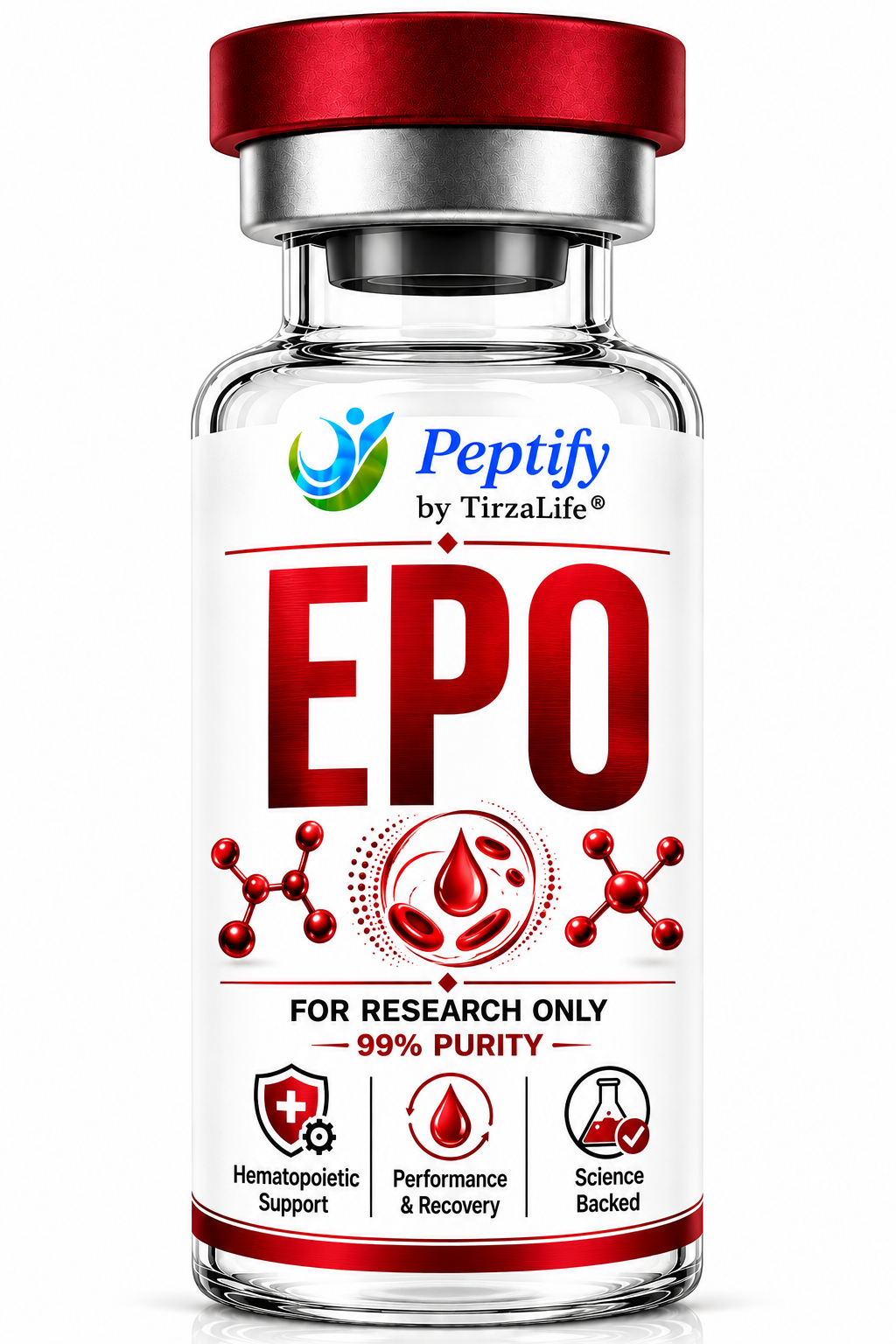
EPO 3000 IU
A prescription erythropoiesis-stimulating agent entry for boxed-warning level safety review.
Contents
Use this guide as a structured review page. The same headings appear for every protocol so clients and the care team can scan the page consistently.
Quickstart Highlights
Reference-linked protocol details for EPO 3000 IU.
- Reference title: EPO Dosing Protocols and Administration | Peptide Protocol Wiki
- Product: EPO 3000 IU vial
- A prescription erythropoiesis-stimulating agent entry for boxed-warning level safety review.
- Source page: Open source
Protocol Overview
EPO refers to erythropoietin or epoetin products used under prescription for selected anemia indications. These products can increase hemoglobin and carry serious cardiovascular, thromboembolic, hypertension, seizure, and tumor-progression warnings, so review must include diagnosis, labs, blood-pressure control, clotting history, oncology context, and clinician monitoring.
- Prescription ESA context
- Hemoglobin and blood-pressure monitoring
- Clotting and cardiovascular screening
- Clinician-directed safety review
Recommended Source
This protocol is linked to the workbook reference source below.
- EPO Dosing Protocols and Administration | Peptide Protocol Wiki Open source
Dosing & Reconstitution Guide
Treatment of anemia in chronic kidney disease, chemotherapy, and surgical settings (FDA-approved)
| Test | Timing | Purpose |
|---|---|---|
| CBC with differential and reticulocyte count | Baseline | Establish baseline hemoglobin and assess erythropoietic activity |
| Iron studies (ferritin, transferrin saturation) | Baseline | Iron deficiency limits EPO response; most patients need iron supplementation |
| CMP | Baseline | Renal function baseline |
| Blood pressure | Baseline | EPO can exacerbate hypertension |
| Vitamin B12 and folate | Baseline | Nutritional deficiencies impair erythropoiesis |
| Hemoglobin | Weekly during dose titration; every 2-4 weeks once stable | Target 10-11.5 g/dL; do NOT exceed 12 g/dL (increased cardiovascular risk) |
- Amount
- 50-100 IU/kg three times weekly (CKD); 40,000 IU weekly (chemotherapy)
- Frequency
- Three times weekly (CKD) or once weekly (chemotherapy)
- Duration
- Ongoing with dose adjustments to maintain target hemoglobin
- Route
- Schedule
- Timing
- No specific time of day; for dialysis patients, often given during dialysis session via IV
- ✓ Rotate injection sites
- Repeatable
- Yes
- ✓ Ready-to-use — no reconstitution required
- Storage: Store at 2-8C (36-46F). Do not freeze or shake. Protect from light. Single-dose vials should be used immediately once opened. Multi-dose vials may be stored at 2-8C for up to 21 days after initial entry.
- CBC with differential and reticulocyte count
- When: Baseline
- Why: Establish baseline hemoglobin and assess erythropoietic activity
- Iron studies (ferritin, transferrin saturation)
- Why: Iron deficiency limits EPO response; most patients need iron supplementation
- CMP
- Why: Renal function baseline
- Blood pressure
- Why: EPO can exacerbate hypertension
- Vitamin B12 and folate
- Why: Nutritional deficiencies impair erythropoiesis
- Hemoglobin
- When: Weekly during dose titration; every 2-4 weeks once stable
- Why: Target 10-11.5 g/dL; do NOT exceed 12 g/dL (increased cardiovascular risk)
- →SC route is preferred for non-dialysis patients (more sustained levels, lower dose requirements)
- →Most patients require concurrent iron supplementation
- →Multi-dose vials contain benzyl alcohol - do NOT use in neonates
- →Contraindication: Avoid with uncontrolled hypertension, pure red cell aplasia (PRCA) from prior ESA use, or allergy to mammalian cell-derived products; use lowest dose to avoid transfusion
- Primary Use: Treatment of anemia in chronic kidney disease, chemotherapy, and surgical settings (FDA-approved)
- Dosing Summary: 50-100 IU/kg three times weekly (CKD); 40,000 IU weekly (chemotherapy) administered Three times weekly (CKD) or once weekly (chemotherapy) for Ongoing with dose adjustments to maintain target hemoglobin.
- Route of Administration: subcutaneous (Three times weekly (CKD) or once weekly (chemotherapy)).
- Timing Notes: No specific time of day; for dialysis patients, often given during dialysis session via IV
- Cycle Duration: Ongoing with dose adjustments to maintain target hemoglobin.
- SC route is preferred for non-dialysis patients (more sustained levels, lower dose requirements)
- Most patients require concurrent iron supplementation
- Multi-dose vials contain benzyl alcohol - do NOT use in neonates
- Contraindication: Avoid with uncontrolled hypertension, pure red cell aplasia (PRCA) from prior ESA use, or allergy to mammalian cell-derived products; use lowest dose to avoid transfusion
- Epoetin alfa is supplied as a ready-to-use solution in single-dose vials. Do not shake. Do not dilute. Inspect visually for particulate matter before use. Multi-dose vials contain benzyl alcohol as preservative.
- Recommended injection sites for EPO include:
- Subcutaneous (abdomen, thigh, upper arm)
- Intravenous (for dialysis patients via vascular access)
- Site rotation is recommended to minimize local tissue reactions and ensure consistent absorption.
- Store at 2-8C (36-46F). Do not freeze or shake. Protect from light. Single-dose vials should be used immediately once opened. Multi-dose vials may be stored at 2-8C for up to 21 days after initial entry.
- EPO overview and research guide
- EPO side effects profile
- EPO research evidence
- Free access to verified vendor scores, pricing, and suppliers.
- 150+ peptide profiles · 30+ comparisons · 18 research tools
- Get notified when we update dosing protocols or publish related comparisons.
Dosing Protocol
Free access to research-backed dosing information for all peptides.
| Hemoglobin Response | Action |
|---|---|
| Increase >1 g/dL in 2 weeks | Reduce dose by 25% |
| Hemoglobin exceeds 11 g/dL (CKD) | Hold dose until <11 g/dL, then restart at 25% lower dose |
| No response after 4 weeks | Increase dose by 25%; evaluate iron status |
| No response after 12 weeks at adequate dose | Consider ESA-hyporesponsiveness evaluation |
- 150+ peptide profiles · 30+ comparisons · 18 research tools
- Free access to complete dosing tables and protocol details.
- Epoetin alfa is supplied as a ready-to-use solution in single-dose vials. Do not shake. Do not dilute. Inspect visually for particulate matter before use. Multi-dose vials contain benzyl alcohol as preservative.
- ✓Subcutaneous (abdomen, thigh, upper arm)
- ✓Intravenous (for dialysis patients via vascular access)
- Store at 2-8C (36-46F). Do not freeze or shake. Protect from light. Single-dose vials should be used immediately once opened. Multi-dose vials may be stored at 2-8C for up to 21 days after initial entry.
- Compare these clinical doses with what 90+ community members report using.
- Based on 90+ community reports
- Review safety warnings and contraindications before starting any protocol.
- Erythropoietin products are prescription medications that must be dosed under medical supervision. The following information reflects FDA-approved labeling and clinical guidelines.
- The recommended starting dose for dialysis patients is 50-100 units/kg administered three times per week, either intravenously or subcutaneously. The dose is titrated to achieve and maintain a target hemoglobin of 10-11.5 g/dL. Dose adjustments should not exceed 25% increases per adjustment period.
- Current guidelines emphasize the importance of not exceeding hemoglobin levels of 11.5-12 g/dL, as higher targets have been associated with increased cardiovascular events in multiple clinical trials.
- For non-dialysis CKD patients, the recommended starting dose is 50-100 units/kg three times weekly subcutaneously. The subcutaneous route is preferred in non-dialysis patients as it provides more sustained drug levels and may reduce overall dose requirements.
- For cancer patients receiving myelosuppressive chemotherapy, epoetin alfa is initiated when hemoglobin drops below 10 g/dL. Two dosing regimens are approved: 150 units/kg three times weekly or 40,000 units once weekly. Treatment should be discontinued after the completion of the chemotherapy course.
- Subcutaneous injection is the preferred route for non-dialysis patients and can be used for dialysis patients. The injection should be administered into the abdomen, thigh, or upper arm. The subcutaneous route provides slower absorption with more sustained serum levels, potentially allowing less frequent dosing.
- Intravenous administration is typically used for hemodialysis patients, given through the venous line of the dialysis circuit. IV bolus injection takes approximately 1 minute. The IV route produces higher peak levels with a shorter duration compared to SC administration.
- Hemoglobin: Check at least weekly during dose titration; every 2-4 weeks once stable
- Blood pressure: Monitor at each visit; EPO can exacerbate hypertension
- Iron studies: Ferritin and transferrin saturation before and periodically during therapy; most patients require concurrent iron supplementation
- Reticulocyte count: May be useful for assessing response to therapy
- Epoetin alfa solutions should be stored at 2-8 degrees C (36-46 degrees F). The product should not be frozen or shaken, as both can denature the protein. Single-dose vials should be discarded after use. Multi-dose formulations contain benzyl alcohol as a preservative and should not be used in neonates.
- EPO belongs to the Performance category of research peptides. Dosing protocols for EPO are derived from available clinical trial data. These protocols are provided for research reference only and do not constitute medical advice. Actual dosing decisions should be made by qualified healthcare providers based on individual patient factors.
- The following dosing protocols have been documented in clinical research for EPO:
- Dose: 50-100 units/kg three times weekly
- Frequency: Three times weekly
- Duration: Ongoing with dose adjustments
- Adjust dose to maintain hemoglobin 10-11.5 g/dL; IV or SC administration
- Frequency: Three times weekly or less
- Duration: Ongoing with monitoring
- Subcutaneous preferred; lower starting doses may be appropriate
- Dose: 150 units/kg three times weekly or 40,000 units weekly
- Frequency: Weekly or three times weekly
- Duration: During chemotherapy course
- Initiate when hemoglobin less than 10 g/dL; discontinue after chemotherapy
How This Works
Research protocols for EPO typically use 50-100 units/kg three times weekly administered Three times weekly for Ongoing with dose adjustments. Adjust dose to maintain hemoglobin 10-11.5 g/dL; IV or SC administration. Alternative protocols may use different doses depending on the research objective. No FDA-approved human dosing exists.
- EPO is typically administered via the following routes: Subcutaneous (abdomen, thigh, upper arm), Intravenous (for dialysis patients via vascular access). The choice of administration site may depend on the research protocol and study objectives. Always follow established research protocols.
- Epoetin alfa is supplied as a ready-to-use solution in single-dose vials. Do not shake. Do not dilute. Inspect visually for particulate matter before use. Multi-dose vials contain benzyl alcohol as preservative.
- Store at 2-8C (36-46F). Do not freeze or shake. Protect from light. Single-dose vials should be used immediately once opened. Multi-dose vials may be stored at 2-8C for up to 21 days after initial entry.
- Typical research protocols for EPO use a cycle duration of Ongoing with dose adjustments to maintain target hemoglobin. Cycles may be repeated based on research objectives.
- Pre-filled reconstitution and dose math for EPO
- Plan multi-peptide calendars with vial tracking
Important Note
This page is informational and does not authorize use. Peptify clients should complete assessment, disclose medications and health history, and follow the clinician-approved plan only.
- Do not start, stop, combine, or change a protocol based only on website content.
- Emergency symptoms require urgent medical care, not a website or routine follow-up message.
References
Reference source used for this protocol page.
- EPO Dosing Protocols and Administration | Peptide Protocol Wiki Open source
- Peptify Reconstitution Guide